





What are acids in skincare? A formulator breaks it down
There are two very different families of acids in skincare and they do completely different jobs. Once you understand the split, the whole category makes a lot more sense.
Exfoliating acids remove dead skin cells to improve texture, clarity, and tone. Nurturing acids hydrate, calm, or support your skin's natural processes. Same word, almost nothing else in common.
Here's how I think about them.
Exfoliating acids
AHAs (alpha hydroxy acids) are water-soluble, which means they work on the skin's surface. They're great for resurfacing texture and treating pigmentation. The main ones you'll see:
Glycolic acid is the smallest molecule in the AHA family, so it penetrates most readily and delivers the most noticeable results. Worth knowing if your skin is on the sensitive side, because more penetration also means more potential for irritation.
Lactic acid is larger, gentler, and has the added benefit of being a natural humectant — it draws moisture into the skin as it works. It's the one I chose for our Acid Washed cleanser (at 5%, which is quite a high percentage for a wash-off product, so it's formulated carefully around that).
Mandelic acid is worth knowing about if you're sensitive or acne-prone. It's a larger molecule still, so it absorbs more slowly, and it has a bit of antimicrobial action as a bonus. Under-rated in my opinion.
BHAs (beta hydroxy acids) are oil-soluble. That's the important bit. It means they can get through the sebum in your pores and clear out congestion from the inside — AHAs can't do this. Salicylic acid is the main one. If salicylic irritates you, try betaine salicylate, which does the same job more gently.
PHAs (polyhydroxy acids) — gluconolactone, lactobionic acid — are the gentlest exfoliants available. The molecules are large enough that they barely penetrate the skin at all, which means almost zero irritation. If you've tried AHAs and found them too much, start here.
Nurturing acids
Hyaluronic acid is a humectant, not an exfoliant. It holds up to 1,000 times its weight in water and works well for everyone with no real caveats. The molecular weight matters more than most brands admit — lower molecular weight HA travels deeper and does more lasting work. Our Superorganism serum uses two low-weight forms specifically for this reason.
Azelaic acid is anti-inflammatory and one of the most underused ingredients in skincare. It's genuinely effective for rosacea, inflammatory acne, and post-inflammatory hyperpigmentation. It's also one of the few actives considered safe in pregnancy.
Hypochlorous acid (HOCl) is interesting because your skin actually produces it already as part of its own immune response. Applied topically, it's antimicrobial and anti-inflammatory — good for reactive, sensitive, or acne-prone skin. More on this on a previous blog post!
Vitamin C acids — L-ascorbic acid, ascorbyl glucoside, sodium ascorbyl phosphate, and others — each do slightly different things around brightening and overall skin health. L-ascorbic is the most potent but least stable; the derivatives are gentler and easier to formulate with.
My two favourites:
Lactic acid (in Acid Washed)
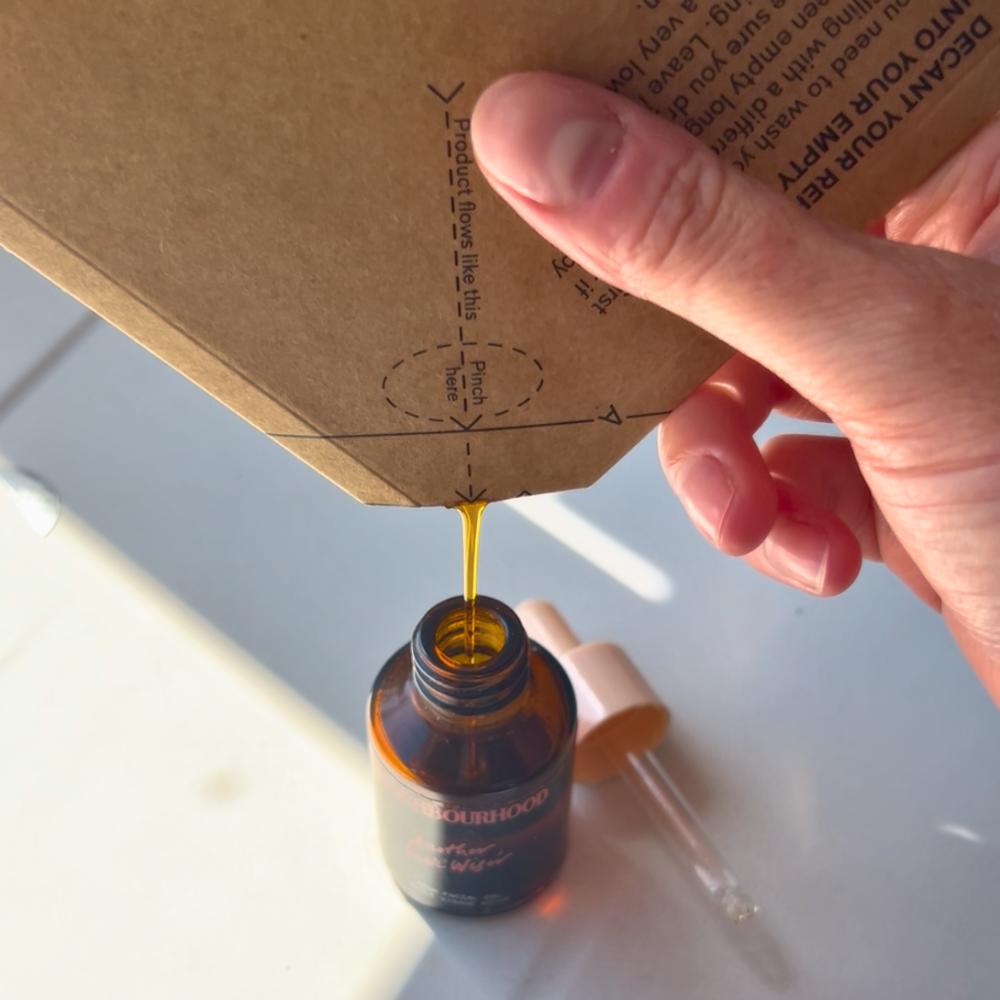
I used 5% lactic in this formula and made it into a concentrated, honey-like gel — you genuinely only need a tiny bit. The amber colour comes from yucca extract, a North American plant that acts as a natural soap (yes, some plants are natural soaps — nature is endlessly cool). It helps the cleanser do its job without stripping moisture, which matters when you're working with a 5% acid. Witch hazel, tea tree, and chamomile round it out.
For dry skin, use it a couple of times a week as a clarifying wash. Oily skin can use it daily.
Hyaluronic acid (in Superorganism)
Superorganism uses two low-molecular-weight forms of HA so it can travel deeper into the dermis, where hydration does the most long-term good. The plant actives — kelp, rice, mushroom — are fermented, so they're also at a smaller particle size and can theoretically be carried deeper by the HA. You can use it every day, all skin types. There's no such thing as too much hydration.
Micaela, Founder & Formulator / Neighbourhood Botanicals

